Crawling insect and spider management in Sacramento resolves active infestations caused by the unique climate along the Sacramento and American river basins. When summer temperatures regularly cross 95 degrees…
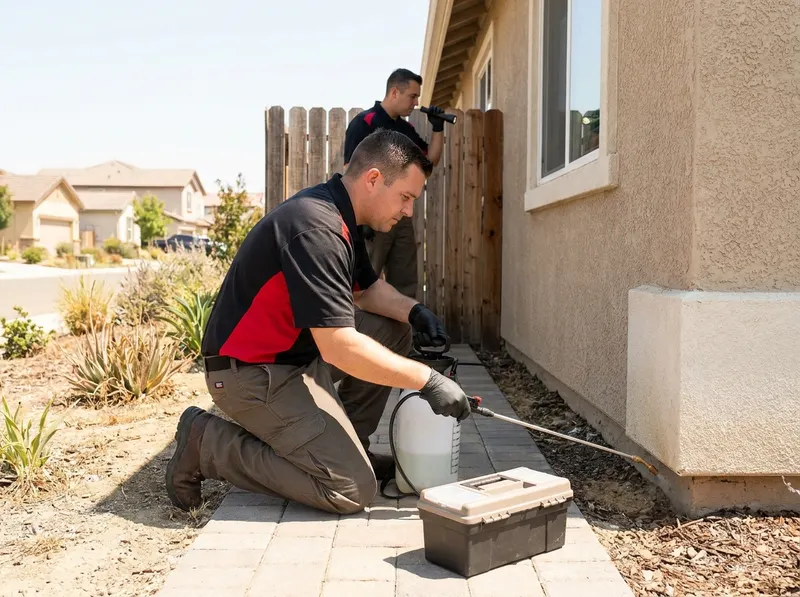
Crawling insect and spider management in Sacramento resolves active infestations caused by the unique climate along the Sacramento and American river basins. When summer temperatures regularly cross 95 degrees Fahrenheit in the Central Valley, subterranean and perimeter pests migrate inward seeking plumbing lines, crawl spaces, and dark baseboard recesses. Homeowners in Midtown bungalows and classic Curtis Park residences often encounter sudden surges of oriental cockroaches coming up through municipal drains, while newer construction in Natomas and Pocket-Greenhaven faces structural colonization by western black widows along exterior stucco seams and weep screens. Instead of applying broadcast chemical drenching across living quarters, California Department of Pesticide Regulation standards dictate mechanical exclusion and microscopic gap sealing as the primary barrier. Technicians systematically inspect damp basements, under-sink cabinets, and perimeter brick weep holes to eliminate entry conduits permanently.
Effective spider suppression requires disrupting both the resident arachnids and their secondary food supply. Spiders settle exclusively where flying and crawling insects maintain reliable populations. Interior treatments apply focused micro-encapsulated formulations into hidden sill plates, utility chases, and structural joints identified by University of California Statewide Integrated Pest Management Program guidelines, sparing central living areas and floor surfaces where children and family pets spend time. Rather than locking property owners into rigid quarterly binding contracts, ProActive Pest Relief delivers clear, standalone corrective interventions focused on physical exterior exclusion. Technicians fit wire mesh into uncapped weep screeds and run residual botanical or targeted synthetic barriers along soil-to-foundation contacts, stopping migration patterns before insects penetrate baseboard trim.
Older architectural styles throughout East Sacramento, Land Park, and Boulevard Park feature raised foundations and subfloor wood framing that hold localized humidity, attracting woodlice, silverfish, and silverfish predators such as centipedes. To protect indoor living comfort, structural moisture reduction strategies are deployed alongside treatment. Adhering to standards set by the National Pest Management Association, our service prioritizes precision dust formulations inside switch plates and wall junctions rather than baseboard flooding. This calculated strategy maintains indoor environmental stability, stops nocturnally active pests from entering kitchens and bedrooms, and ensures that structural barriers remain resistant against exterior insect pressures across all seasons.
Every job gets a firm, written price after a free on-site visit.
For standards, safe disposal, and service guidance on PEST CONTROL SEVICE in Sacramento, CA, useful references include U.S. EPA, ENERGY STAR, U.S. Dept. of Energy, Consumer.gov, U.S. Census Bureau, and Google Maps. General consumer and small-business resources are available from USA.gov, Better Business Bureau, FTC Consumer Advice, U.S. Small Business Administration, and Ready.gov.
Tell us about your crawling insect and spider management job in Sacramento and we'll send a clear, written quote, usually the same day.
 ProActive Pest Relief