Parasite infestations in Northern California develop rapidly under specific environmental triggers. In mature tree-canopy neighborhoods such as East Sacramento, Land Park, and Boulevard Park, organic debris and damp…
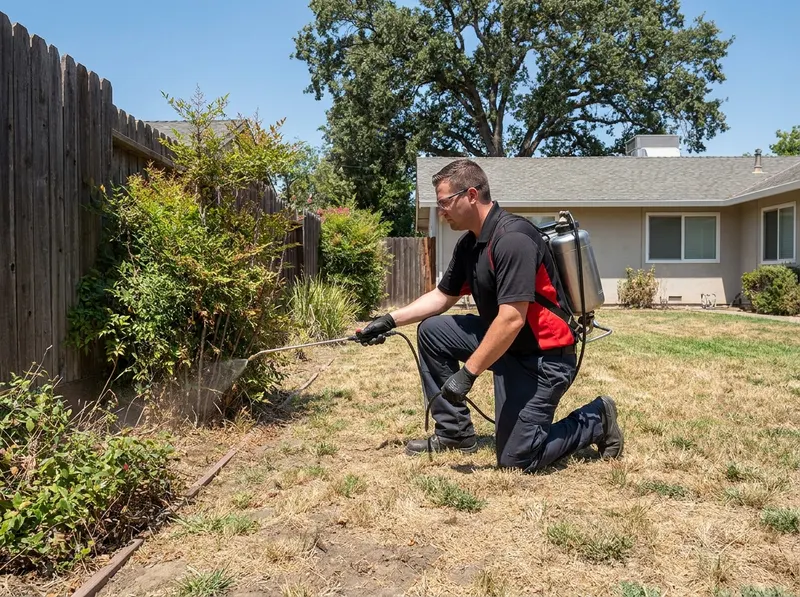
Parasite infestations in Northern California develop rapidly under specific environmental triggers. In mature tree-canopy neighborhoods such as East Sacramento, Land Park, and Boulevard Park, organic debris and damp mulch create sheltered nesting zones. Fleas (primarily Ctenocephalides felis) thrive when relative humidity exceeds 50 percent alongside temperatures between 70 and 85 degrees Fahrenheit, conditions thoroughly tracked by the UC Statewide Integrated Pest Management Program. Outdoor hosts including feral cats, raccoons, and squirrels transport adult ticks and fleas across fences into residential yards. When pests penetrate living rooms and sleeping quarters, the breach causes acute domestic anxiety. Effective relief does not require saturating carpets with broad-spectrum toxins; it requires addressing micro-habitats where larvae feed on organic dust before pupating into biting adults.
Interior treatments focus strictly on crack, crevice, and baseboard junctions where immature stages gather. The life cycle requires disrupting both the egg and larval phases. Applying synthetic pyrethroids blindly often triggers chemical sensitivities in children and domestic animals without penetrating the pupal cocoon. Guidance from the US Environmental Protection Agency stresses target-specific insect growth regulators (IGRs) like pyriproxyfen, which prevent larvae from molting into biting adults. Technicians assess homes with raised foundations common in Curtis Park, Midtown, and Oak Park, where unsealed crawl space vents allow wandering wildlife to deposit tick nymphs beneath floorboards. Sealing ground-contact breaches prevents recurring waves of secondary emergence without trapping chemical fumes indoors.
Exterior treatments require methodical parcel zoning rather than indiscriminate lawn blasting. Ticks like the Western black-legged tick (Ixodes pacificus) seek humid ground cover near irrigated landscapes and shady creek boundaries, as documented by the California Department of Public Health. In open-subdivision terrains like Natomas and Pocket-Greenhaven, transitional areas between manicured turf, brush borders, and fence lines require specific liquid or granular moisture-reduction treatments. Technicians review canopy clearance under standards outlined by the International Society of Arboriculture to reduce dense microclimates, alongside landscape water audit recommendations from the Irrigation Association. In addition, field teams reference vector control strategies managed through the Sacramento County environmental department and the Sacramento-Yolo Mosquito and Vector Control District to coordinate tick tracking with broader regional disease mitigation measures.
Sustainable parasite reduction follows four sequential phases. First, homeowners conduct a complete interior vacuuming of rugs, cushions, and floor joints, discarding the sealed vacuum canister outside immediately to purge dislodged pupae. Second, technicians execute precision applications of IGRs along perimeter baseboards, under structural furniture, and inside pet rest zones. Third, exterior perimeter barriers extend 3 to 6 feet up structural foundations and outward across sheltered soil bands, referencing structural maintenance principles set by the National Association of Home Builders and pet security advice from the ASPCA Animal Poison Control Center. Fourth, follow-up inspections at 14 days measure lingering pupal hatch rates, verifying biological termination without locking families into forced multi-year recurring service agreements.
Every job gets a firm, written price after a free on-site visit.
For standards, safe disposal, and service guidance on PEST CONTROL SEVICE in Sacramento, CA, useful references include U.S. EPA, ENERGY STAR, U.S. Dept. of Energy, Consumer.gov, U.S. Census Bureau, and Google Maps. General consumer and small-business resources are available from USA.gov, Better Business Bureau, FTC Consumer Advice, U.S. Small Business Administration, and Ready.gov.
Tell us about your flea and tick environmental control job in Sacramento and we'll send a clear, written quote, usually the same day.
 ProActive Pest Relief